Mobility has always been foundational to the business events industry. The ability for people to cross borders, share knowledge, and build relationships in person is core to the sector’s value proposition. Yet today, that ability is under increasing strain.
Geopolitical tension, visa complexity, trade protectionism, climate disruption, and infrastructure pressures are reshaping global movement. While demand for business travel and events continues to grow, the pathways to participation are becoming more fragmented and unpredictable.
As Michael Dominguez, President and CEO of Associated Luxury Hotels International (ALHI) — an EIC Strategic Partner and Corporate Member — recently observed, “The challenge isn’t that people don’t want to travel—it’s that travel around the world has become more complex, more uncertain, and in some places, more exclusionary.”
The Futures Landscape Study 2025 identifies Mobility as one of the 12 key forces shaping the future of the business events ecosystem, underscoring its direct connection to access, equity, risk, and economic vitality.
Geopolitics and the New Reality of Travel
Geopolitical dynamics are now inseparable from event planning. From visa delays and travel bans to regional conflict and diplomatic tensions, mobility decisions increasingly carry political and operational risk.
Dominguez has been candid about this reality. “We’re operating in a world where geopolitics touches everything—from where events can be held to sometimes who can attend them. That’s not a temporary condition; it’s the environment we’re in,” he said.
For organisers, this means mobility can no longer be treated as a logistical afterthought. It must be integrated into early-stage strategy, destination selection, and risk mitigation planning. The ability to anticipate disruption—and communicate transparently with attendees—has become a core competency.
At the same time, geopolitical complexity reinforces the importance of business events themselves. In moments of division, in-person convening remains one of the few mechanisms capable of fostering dialogue, trust, and collaboration across borders.

Mobility, Access, and the Equity Equation
Mobility is not only about movement—it is about who gets to participate.
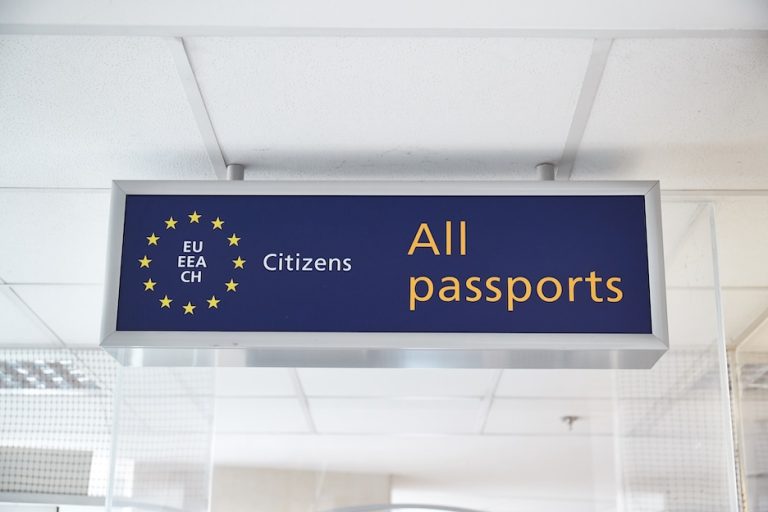
Visa inequities, rising travel costs, and uneven infrastructure can disproportionately exclude professionals from emerging and developing markets, limiting the diversity of voices in global conversations. The Futures Landscape Study highlights this as a critical tension: mobility enables knowledge exchange, yet barriers to mobility risk reinforcing global inequality.
“As an industry, we have to ask hard questions,” Dominguez noted. “If the same people can always get in the room and others can’t, we’re narrowing perspectives at exactly the moment we need them most and continue to talk to ourselves.”
Hybrid formats and regionalised event models offer partial solutions, but they can never replace the impact and results of meeting face-to-face with unique global perspectives. Instead, they should be viewed as complementary strategies that expand access while preserving the unique value of face-to-face engagement.
Experience Still Matters
Despite the challenges, demand for in-person business events remains resilient. What has changed is attendee expectation. Travel is no longer judged solely on efficiency or cost—it is evaluated as a holistic experience.
“The bar is higher now,” Dominguez explained. “If people are going to navigate complexity to attend an event, the experience has to be worth the journey. It has to be delivered with value, connection, and a sense of purpose in design.”
This places new emphasis on destinations, venues, and partners that can deliver seamless, human-centred journeys—before, during, and after the event. Mobility is increasingly intertwined with wellbeing, sustainability, and service quality.

The Next Five Years: From Friction to Foresight
Looking ahead, the Futures Landscape Study 2025 suggests that the future of mobility will be shaped less by volume and more by intentionality. Event organisers will need to:
- Factor geopolitical and climate risk into long-term planning
- Advocate for more consistent and equitable travel policies
- Design events that justify the effort of travel through meaningful outcomes
- Build flexibility into formats, destinations, and timelines
Dominguez believes the industry is capable of rising to the moment. “Business events have always adapted to change,” he said. “What matters now is that we don’t retreat. Connection still matters—and it’s worth the work it takes to protect and grow it.”
Why Mobility Still Moves the Industry Forward
In a world defined by fragmentation, mobility remains both a challenge and an opportunity. While the pathways to gathering may be more complex, the purpose of gathering has never been clearer.
The business events industry sits at the intersection of movement and meaning. By approaching mobility with foresight, empathy, and advocacy, the sector can continue to ensure that ideas—and people—keep moving forward.
As the Futures Landscape Study 2025 reminds us, the future of business events will not be shaped by a single destination or policy, but by our collective ability to navigate complexity without losing sight of why we gather in the first place.