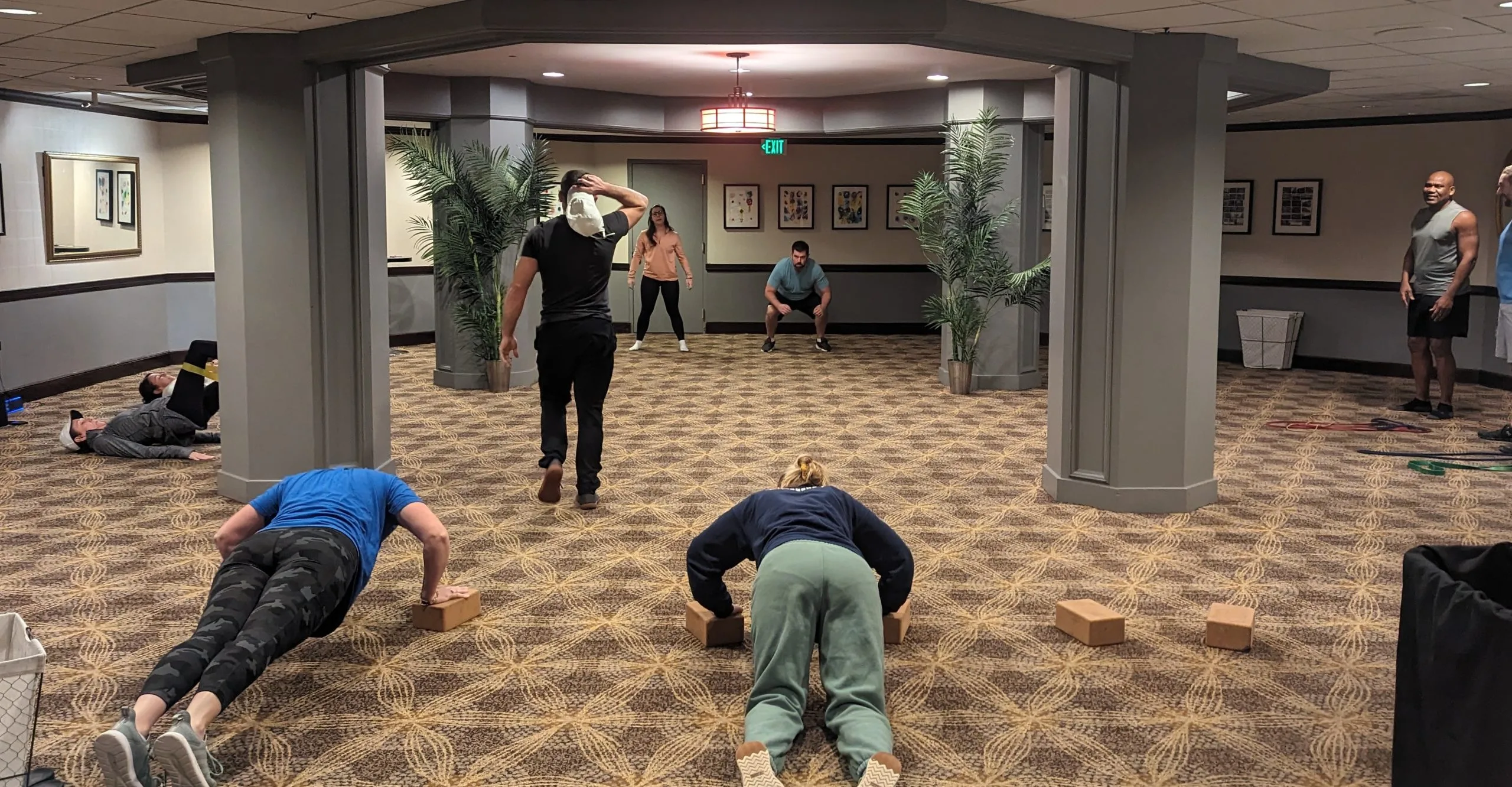
I have built the wellness lounge, I’ve budgeted the smoothie bar, booked the 7 a.m. body weight workout instructor, sourced the puppies for the cuddle pit, and found an empty room to be the quiet room with the aromatherapy diffuser.
And I’ve also watched those spaces sit nearly empty while the session rooms down the hall host people running on late nights, early mornings, three coffees busily catching up on email in the back of the room.
We’re still not building wellbeing into our events. We’re building wellbeing stations and making them compete against literally everything else… as though it’s a box on the event checklist. Wellness options? Check.
Before I go further, I should be honest about my starting position, because I don’t come to this topic as a wellness evangelist… So when my EIC friends asked me to do a piece on wellness, well, that doesn’t come naturally to me. I skip the morning workout, I say yes to the glass(es) of wine at the reception, and yes, I eat carbs.
Listen, I’m Gen X. I was raised professionally on “put on your big girl panties and deal with it,” and I did, through25 years of load-ins, 4 a.m. wake-up calls, and show days that started before sunrise and ended after the afterparty. Not to mention the global planning calls in the early morning with EMEA and the late, late, late nights with APAC. It’s just the job. This is the job. (You cry at night or in the swag closet, then move on.) So when someone tells me they need to step away in the middle of a live event because their nervous system needs a reset, my honest first reaction is not compassion… It’s a raised eyebrow and maybe a full-on eye roll.
Hold that thought, because I’m going to complicate it in a minute. But first let’s talk about what our industry calls “wellbeing,” because I think we took a real problem and handed it a surface-level solution.
The Wellness-Industrial Complex of Events
Over the last 10 years, attendee wellbeing has become a programming category. A track or a lounge or (let’s be real) a line on the sponsorship prospectus. “If no one sponsors it, we just won’t have it.” Right?
It makes sense: Wellness programming is sellable/sponsorable. It photographs beautifully for the post-event report. And when all the publications ranked event coordination the fifth most stressful job, behind jobs where people can actually die, the industry’s response was to book more panels about stress. And maybe add some chair massages to the hallway break.
To me, yoga at 7 a.m. is not wellbeing, it’s just another amenity. There’s nothing wrong with amenities, mind you. I will happily take the smoothie (but I don’t do yoga in public…)! The problem is that we have let amenities substitute for event design.
Just take a look at the agenda surrounding the wellness lounge: Registration opens at 7 and sessions run back-to-back from the breakfast keynote through the working lunch, into afternoon breakouts, straight into the reception, the dinner, then the afterparty. Then we do it again the next day but with a morning “wellness activity.” The schedule has been engineered, proudly and deliberately, for FOMO. Every gap in the agenda is treated as wasted real estate that a sponsor can activate or that a session can filled.
We sell people a meditation room and then build a schedule that guarantees they will never have 20 unscheduled minutes to use it.
Would it be so bad to put “Free Time” on your agenda?
Or better yet, as David T. Stevens, co-founder of the wellness-first event agency Olympian Meeting said in a Meetings Today (Oct 2024) article: “If you put a block of time in there that says ‘wellness/self-care,’ that communicates to your attendees that you want them to disconnect,” he told Meetings Today. “You’re not trying to get them to schedule meetings or catch up on email or things of that nature. Whereas, if it just says ‘free time,’ nobody’s going to go work out unless they’re that person [already].”
Even the label on the agenda is a design choice.
The Nervous System
So let’s ask the question we skip (but David has been talking about for years): what does a conference do to the human body?
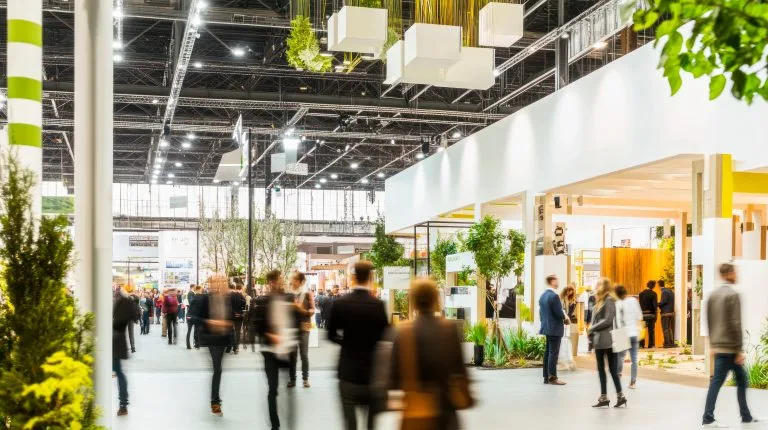
Three days of continuous sensory load. An exhibit hall that is all competing light, sound, and activity. Alcohol as the default social lubricant at every networking function. Oh, and you’re not even on your home time zone.
We measure whether people had a good time and whether the content landed. We do not measure what state their nervous system is in by the third day, or how much our agenda design is to blame for it.
And attendees are already voting with their feet. They skip the last session. They bail on the dinner. They fly out a day early. We read that as an engagement problem and respond with more programming: put the biggest keynoter at the end of the program to get them to stay!
Time to Question the Mindset
Here’s where I have to complicate my own raised eyebrow. Turns out that being able to handle something is not evidence that it was reasonable to ask of me.
My generation didn’t have better nervous systems. And many of us are paying for it now with burnout, health scares, colleagues who left the industry before they should have. We weren’t tougher, we were just better at masking our pain… for a time. And now we are resentful of the next generation of event leaders who won’t put up with that anymore. “We got hazed, you should, too!” is the prevailing sentiment.
But there’s a twist: Phrases like “put your oxygen mask on first” are opposite pieces of advice with the same underlying problem. My generation absorbed the badly designed event through stoicism. This generation absorbs it through self-care rituals. Neither is addressing the problem: which is why the event requires heroics to get through in the first place. Now we’re into a psychological safety conversation of when it is right/safe/okay to raise the red flag.
The suck-it-up ethos, the smoothie bar, and the nervous-system reset in the quiet room are all coping mechanisms for the same failure point… We just keep arguing about which one is more virtuous.
What Designing for Wellbeing Looks Like
If wellbeing isn’t a programming track, what is it?
It’s white space in the agenda. It’s an opt-out culture where “no” is an acceptable RSVP to the 9 p.m. dinner. It’s the quiet room on the main path instead of in Siberia past Hall D. It’s a reception that ends at a humane hour because the 8 a.m. keynote is actually worth going to (or maybe we could push that to 9 a.m. since the gym doesn’t open until 6 a.m. anyway).
And it is psychological safety, for attendees and for the teams producing the event, because they’re all human. An event where an attendee feels safe saying “I disagree” in a session is the same event where a coordinator feels safe saying “I’m over capacity” during the final planning days.
This is the work that communities like Event Minds Matter, founded by Janice Cardinale, are pushing into the mainstream: treating psychological safety not as a soft skill or a wellness perk, but as a trainable, designable professional competency… the way we treat safety briefings and rigging inspections.
She noted that “The competition, the rules of engagement, the hours, proposals, late nights and weekends, have created a monster that is bigger than life itself and we have allowed this to happen right under our noses.”
What I’m Doing Differently
For my own events, this is what it looks like:
- I treat unscheduled time in the agenda as a good thing.
- I start my events later (when possible) so people can work out, get emails done, AND eat breakfast.
- I help attendees connect with others who like to do certain activities together, like a run club or yoga meetup, without needing to find a sponsor and make a huge deal out of it.
The standard of care is shifting underneath us. The events with staying power will see wellbeing migrating from the sponsorship prospectus to the very fabric of the event design. The event professionals who figure that out will create events that people want to stick around for.
And most importantly, that they as the planner want to stick around for, too.

Liz Lathan, CMP, is an experiential strategist, community builder and co-founder of Club Ichi, a private membership community for B2B event marketers. A former corporate event leader with more than 20 years of experience at companies including Dell and IBM, she also leads The Community Factory, helping organisations create human-centred event experiences that spark meaningful connection and year-round engagement.