At IMEX Frankfurt, BEFuture was recognised with the 2026 IMEX-EIC Innovation in Sustainability Award, honouring an initiative that demonstrates how collaboration, innovation and practical action can help advance a more sustainable and resilient business events industry.
 Led by a consortium of eight organisations across six European countries, BEFuture brought together destinations, convention bureaux, universities, SMEs, industry associations and innovation specialists to explore new business models, build industry capacity and accelerate real-world solutions. Its work included an open innovation ecosystem, international research and think tanks, talent development programmes and direct support for 80 innovative projects across Europe.
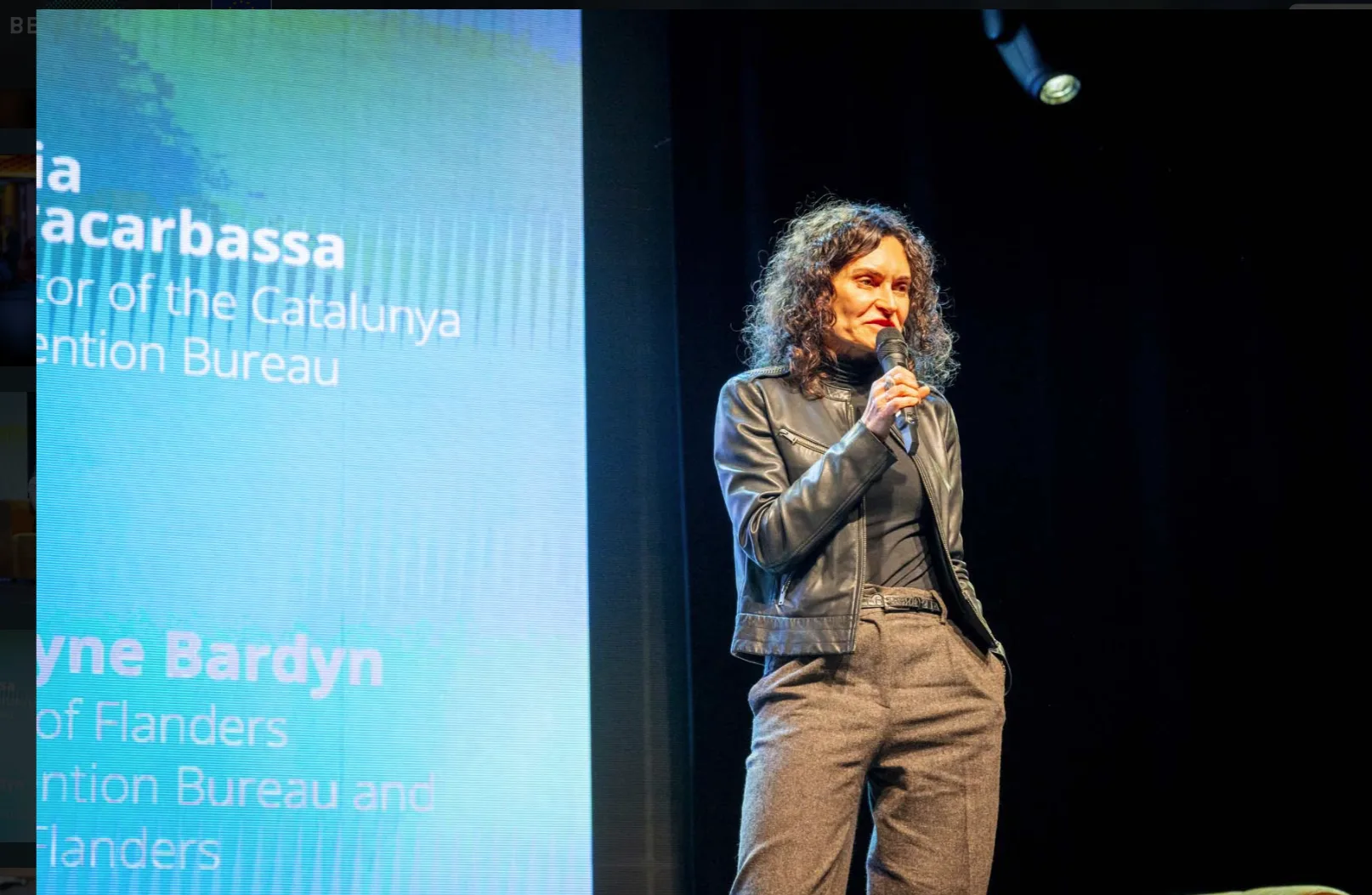
Catalyst sat down with Sonia Serracarbassa, Director of the Catalunya Convention Bureau and coordinator for BEFuture, to discuss the thinking behind BEFuture, the impact it has achieved and what the wider business events community can learn from its collaborative approach to sustainability and innovation.
What challenge within the business events industry was BEFuture created to address?
BEFuture was created to help the business events industry address a combination of interconnected challenges, including sustainability, resilience, digital transformation and innovation. While business events generate significant economic and social value, the sector also faces increasing pressure to reduce its environmental impact, adapt to changing market conditions and strengthen collaboration across a fragmented ecosystem.
The project was designed to leverage innovation and technology to support the transformation of Europe’s business events sector into a regenerative, resilient and responsible industry. Its ambition was not only to promote more sustainable practices, but also to foster a new generation of events that create positive and lasting impact for destinations, businesses and communities. Ultimately, BEFuture aimed to strengthen the competitiveness of the European business events sector and position Europe as a global benchmark for innovation, technology and sustainability.

What makes BEFuture’s approach to sustainability and innovation different from other industry initiatives?
What sets BEFuture apart is its comprehensive and structured approach to transformation. Rather than focusing on a single issue or stakeholder group, the project worked across the entire business events value chain, bringing together destinations, convention bureaux, universities, SMEs, industry associations, technology providers and innovation hubs from across Europe.
The initiative was built around four strategic objectives:
First, creating and promoting an Open Innovation Ecosystem for European Business Events. This included the development of a strategic stakeholder map connecting key actors across the sector.
Second, identifying future scenarios for the industry. Through international multidisciplinary think tanks, research activities and the collection of best practices, BEFuture explored how sustainability, digitalisation, innovation and legacy can shape the future of business events. These insights culminated in the publication of the white paper New Scenarios and Business Models for the Future of Business Events.
Third, building skills and capacity for next-generation events. This was achieved through a Talent Development Programme, industry training activities, an international Innovation Forum and five local innovation hubs designed to inspire collaboration and experimentation.
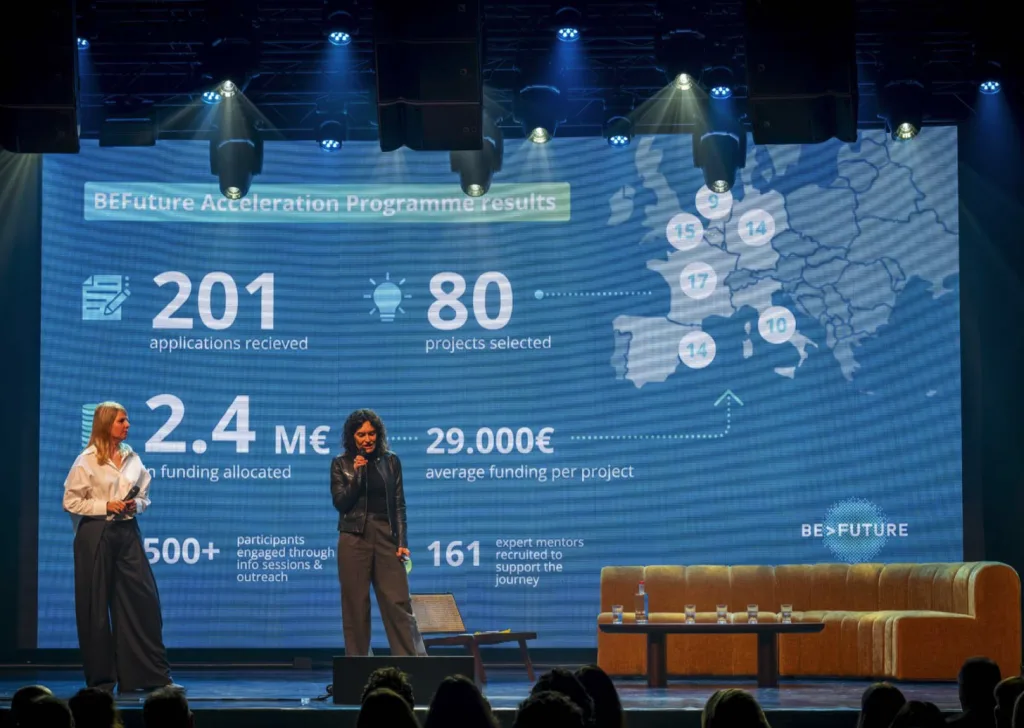
Finally, accelerating transformation through action. The BEFuture Acceleration Programme provided direct funding and support to 80 innovative projects, awarding between €20,000 and €30,000 per initiative to test and implement new solutions across the sector.
This combination of research, capacity building, ecosystem development and financial support enabled innovation to move beyond theory and into real-world implementation.
Can you share a specific example of an idea developed through BEFuture that has been put into practice?
One of BEFuture’s most significant achievements was the launch of the BEFuture Acceleration Programme, which supported 80 innovative projects across Europe. These initiatives focused on four key challenge areas: Climate Change and Circularity, Talent and Inclusion, Event Experience, and Governance and Impact.
Among the projects funded were practical solutions to reduce event waste, promote circular resource use, improve accessibility, strengthen community engagement and enhance hybrid event experiences through digital tools. Several initiatives have already demonstrated how sustainable event practices can be successfully integrated into day-to-day operations, providing scalable models for organisers, venues and destinations across Europe

What measurable environmental, social or economic impact has the project achieved?
BEFuture has generated measurable impact at both industry and business level.
Over the course of the project, 13 international actions and events engaged 707 different companies from across Europe. The consortium also organised nine expert webinars addressing the four main challenge areas: Climate Change and Circularity, Talent and Inclusion, Event Experience, and Governance and Impact.
The project developed an Open Innovation Stakeholder Map comprising around 150 contacts, creating a foundation for long-term collaboration across the European business events ecosystem.
Research activities identified and analysed 82 best practices.
The BEFuture Acceleration Programme attracted 202 project applications, demonstrating strong market demand for innovation support. Ultimately, 80 projects were selected and funded, including:
- 21 projects in Climate Change and Circularity
- 11 projects in Talent and Inclusion
- 33 projects in Event Experience
- 15 projects in Governance and Impact
Through the programme, a total of €2.4 million was distributed to SMEs and organisations developing innovative solutions for the business events sector.
How did collaboration among destinations, businesses and industry partners contribute to the project’s success?
Collaboration was the foundation of BEFuture’s success. The consortium brought together eight organisations from six European countries, combining expertise from destination marketing organisations, convention bureaux, universities, business support organisations, industry associations and innovation specialists.
Catalan Tourist Board (ES), Visit Flanders (BE), Provence-Alpes Cote d’Azur Convention Bureau (FR), Blink (ES), VDVO (DE), NHL Stenden University-ETFI (NL), Università di Milano-Bicocca (IT), Tipik (BE).
One of the project’s most valuable outputs was the creation of the Open Innovation Stakeholder Map, supported by a dedicated engagement plan, this network established a framework for governance, dialogue and cooperation among stakeholders.
This collaborative model helped identify common challenges, share best practices and connect organisations that might not otherwise have worked together. As a result, innovative ideas could be tested, refined and scaled across multiple destinations and markets, significantly increasing their potential impact.
What does winning the 2026 IMEX-EIC Innovation in Sustainability Award mean to the BEFuture team and its partners?
Winning the 2026 IMEX-EIC Innovation in Sustainability Award is an important international recognition of both the project’s achievements and its collaborative approach. For the BEFuture team and partners, the award validates the collective effort and investment made by all participating stakeholders to drive positive change across the industry.
More broadly, the recognition highlights the growing momentum behind a more innovative, sustainable, inclusive and responsible business events sector in Europe. It demonstrates that cross-border collaboration, open innovation and practical action can deliver meaningful results and inspire wider industry transformation.
What can other destinations, venues, organisers and suppliers learn from BEFuture and what comes next for the initiative?
The main lesson from BEFuture is that lasting transformation cannot be achieved in isolation. The industry’s most complex challenges require collaboration across destinations, venues, organisers, suppliers, academic institutions, technology providers and public-sector organisations.
The project also demonstrated the value of combining strategic thinking with practical support. Research, stakeholder engagement, skills development and funding mechanisms are most effective when delivered as part of an integrated ecosystem that enables ideas to move from concept to implementation.
Looking ahead, BEFuture’s legacy will continue through the network it has created, the knowledge resources it has developed, the stakeholder community it has activated and the 80 innovation projects it supported. The ambition is that these relationships, tools and solutions will continue to evolve and scale, helping Europe strengthen its position as a global leader in sustainable, resilient and innovative business events.
Learn more about BEFuture at www.be-future.eu