
The direct costs of event planning have increased by 12.2% since 2019, according to the 2026 EIC Global Economic Significance of Business Events report. In light of escalating food and materials expenses, event strategists face the pressing challenge of protecting their return on investment (ROI).
While existing guidebooks adequately address food waste prevention and sustainable event standards, incorporating structural wellbeing offers a more sophisticated methodology for maximising the value delivered to clients and attendees. Advancing beyond external additions, such as a solitary morning yoga session followed by cold-pressed juice, oatmeal, or green tea, requires planners to actively systematise wellness. This means optimizing attendees’ cognitive performance, focus, energy, and rest throughout the entirety of the event.
Launched at IMEX Frankfurt 2026 and supported by Founding Members Destination Canada and Kenes Group, the Sustainable Event Guidelines provide an industry-aligned framework designed to help organisers, suppliers, destinations and partners embed sustainability into everyday event decisions. Now, following their development through a global, cross-sector collaboration, the Events Industry Council (EIC) is advancing the next phase: helping move the SEGs from ambition to action.
Demographics: Managing Stress and Relationship Building
Different generations carry varying baseline stress levels into professional travel. Frequently, the brief downtime between conference sessions serves as an attendee’s only quiet period in months. Furthermore, personal matters may also compound this stress. To mitigate this, planners can implement structural changes to the event layout and scheduling.
Post-Catering Micro-Breaks
To address the pervasive post-lunch decline in cognitive energy, organisers must rethink the schedule. Encouraging 15 minutes of light, self-paced movement after meals helps stimulate digestion and blunt blood sugar spikes. According to research published in Sports Medicine, this brief movement also helps the brain by resetting focus and supporting the vagus nerve, whose function is to control the body’s parasympathetic nervous system, effectively lowering the heart rate and reducing stress.
For attendees who prefer not to walk or who have mobility considerations, simply transitioning to an outdoor terrace or a fresh-air lounge provides the identical metabolic and mental reset without physical exertion.
Technology: Designing a Digital Detox
Modern business attendees spend days on end diving into screens, whether sorting through emails or maintaining complex spreadsheets. Consequently, prolonged screen exposure upon arrival at an event exacerbates visual fatigue. As many farsighted professionals can attest, attendees are rarely eager to stare at another screen.
While visual presentations remain integral to educational seminars, planners should work with clients to determine the optimal screen size for varying visual comfort levels. Additionally, organisers should consider delaying heavy multimedia use until after several face-to-face interaction opportunities have taken place on the first day to naturally encourage a digital detox.
Climate: Conservation and Environmental Wellbeing
Location, Location, Location
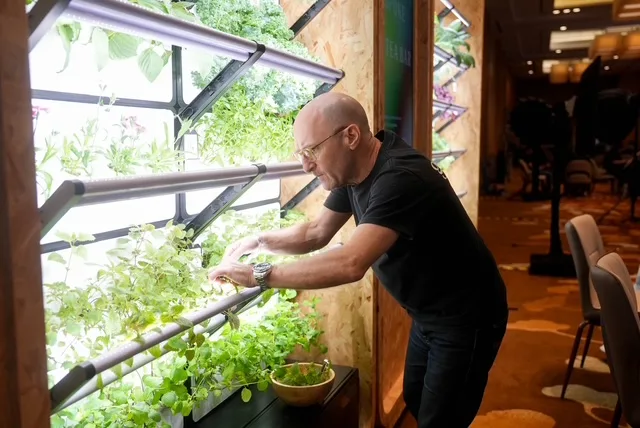
Selecting destinations embedded in nature leverages the restorative power of the environment. Trees are scientifically proven to act as natural air purifiers. Furthermore, environmental studies on Shinrin-yoku (forest bathing) published in PubMed confirm that inhaling airborne compounds emitted by trees measurably lowers stress hormones.
Regional initiatives, such as Blue Ridge’s #LovingLocal: Lights Off, Fireflies On campaign, align seamlessly with the framework set out in the EIC Sustainable Event Standards. Health and well-being are explicitly listed as a core requirement under the “Basic Social Considerations” pillar of the EIC’s Principles for Sustainable Events.
Hyper-Local Food Sourcing
Nutritional variety is essential, but deliberately increasing the accessibility of seasonal, health-conscious options yields the highest return on attendee energy. A nutritionist with insight into specific group needs is advantageous; however, comprehensive guidance from U.S. government fact sheets (such as those provided by the NIH, HHS, and the Cancer Institute) affirms that clean, protein-forward, low-glycemic menus, which avoid heavy reliance on artificial additives like aspartame, consistently sustain energy.
This is an area where the industry has excelled. For example, 1 Hotels in Nashville and The Venetian Resort in Las Vegas actively integrate local, seasonal agriculture into their fall banquet operations. By sourcing local produce, venues demonstrate that reducing the travel time from farm to table is directly congruent with higher nutrient density.
Universal Design and Mobile Networking
When a venue is situated in a walkable city with scenic waterways, historic towns, or a charming neighborhood, planners can implement active networking through fully accessible outdoor routes. By curating outdoor walks or mobile one-on-one sessions, organisers ensure attendees are not trapped in a crowded lobby, allowing moments of intentional being.
Updating the Request for Proposal (RFP)
How do you communicate these ideas and opportunities to get creative with your host? Update the RFP. Venue operators and planners understand the importance of detail, that is the fundamental business of events. Incorporate the following targeted inquiries into the sourcing process:
Demographics: Managing Stress & Relationship Building
- Focus: Securing spaces that allow for nervous system resets and genuine connection.
- “What dedicated quiet zones or low-sensory environments are available on-property for attendees to decompress between high-energy sessions?”
- “Are there transition areas adjacent to the main meeting spaces that offer natural light and seating specifically designed for self-paced, post-meal micro-breaks?”
Technology: Designing a Digital Detox
- Focus: Mitigating screen fatigue and promoting face-to-face interaction.
- “Can your A/V team provide adaptable screen configurations and scalable visual layouts to accommodate varying levels of visual comfort and reduce cognitive strain?”
- “Do you have designated ‘tech-free’ lounges or architectural setups that naturally encourage attendees to unplug and engage in face-to-face interaction?”
Climate: Conservation & Hyper-Local Food
- Focus: Measuring environmental integration and nutrient density.
- “How does the property integrate with the local ecosystem, and what specific opportunities exist for attendees to access nature or participate in regional conservation initiatives?”
- “Can your culinary and financial reporting teams provide transparent data on your hyper-local sourcing percentages, specifically for seasonal, low-glycemic, and protein-forward menu options?”
Universal Design & Mobile Networking
- Focus: Ensuring movement is accessible and sophisticated for all attendees.
- “Do your outdoor spaces and nearby trails feature fully paved, ADA-compliant routes with consistently accessible seating and shade?”
- “Can the venue provide detailed property maps so attendees can make empowered, self-paced choices regarding mobile networking sessions? This includes route distances and elevation changes
The Como Wellbeing Framework, born out of global summits, argues that businesses and governments must measure human wellbeing as rigorously as they measure GDP or profit margins, because wellbeing is the ultimate predictor of productivity, retention, and long-term success.
The business of events is no different. To protect the investment of gathering, we must build environments that intentionally allow moments of being.

A member of EIC’s Sustainability and Social Impact Committee, Erika Gonzalez is a sustainability and systems professional with experience across corporate climate initiatives, food systems, hospitality, and cross-functional program delivery. She specializes in translating complex sustainability priorities, data, and standards into practical, scalable guidance for organizations and industry stakeholders.